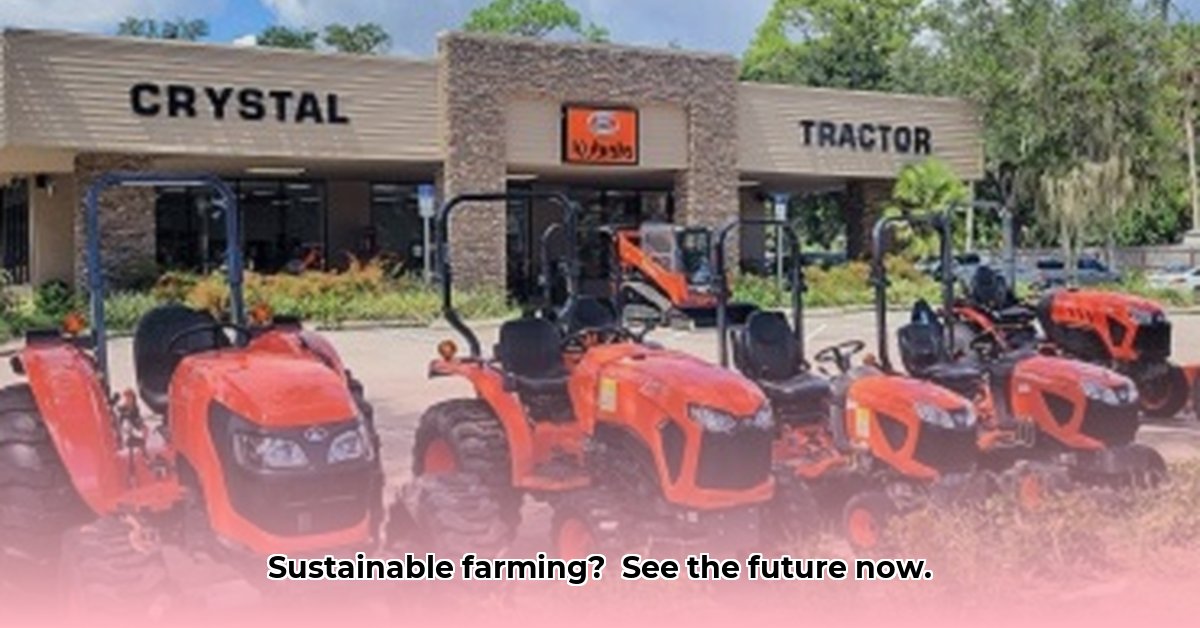
Crystal Tractor in Palatka, Florida, is leading a revolution in agriculture, demonstrating how farming can be both profitable and environmentally responsible. This isn't about dusty overalls and back-breaking labor; it's about high-tech solutions and sustainable practices that lead to better yields, less waste, and a healthier planet. For more information on similar operations, check out this example. This article explores how Crystal Tractor is transforming agriculture in Palatka and beyond.
Precision Agriculture: Farming Smarter, Not Harder
Imagine a tractor that knows precisely where to plant each seed, the ideal amount of water and fertilizer each plant needs, and the optimal harvest time. This is precision agriculture – a data-driven approach that maximizes efficiency and minimizes waste. How is this transformation impacting the Palatka farming community? Is it truly delivering on its promise of higher yields and reduced environmental impact?
Using GPS-guided tractors, soil sensors, and drones for aerial surveys, farmers collect massive amounts of data. This data transforms farming from guesswork to a science-based operation. For example, soil sensors can pinpoint areas needing more irrigation, allowing for precise adjustments and reducing water waste. But what about the challenges? The initial investment can be substantial, requiring training and expertise for effective data interpretation and technology maintenance. However, the potential for increased profits and reduced environmental impact makes precision agriculture a game-changer.
A Palatka Farmer's Story: Embracing the Future
Let's consider Sarah, a hypothetical orange grower near Palatka. Sarah is weighing the benefits of precision agriculture against traditional methods. Implementing GPS-guided planting would improve accuracy, save on seeds, and maximize land use. However, adopting this costly technology requires careful planning.
Here's a step-by-step approach Sarah might take:
- Needs Assessment: Identify key challenges (water conservation, fertilizer efficiency, etc.).
- Technology Research: Explore available systems, comparing costs and benefits. Consult with experts and other farmers.
- Training: Seek out workshops, online courses, or support from organizations like Crystal Tractor to gain the necessary skills.
- Phased Implementation: Begin with a small area to test the technology before full-scale adoption.
- Ongoing Monitoring: Regular monitoring and adjustments are crucial for maximizing efficiency and refining the approach.
Crystal Tractor plays a crucial role in this transition by providing access to technology, support, and training, potentially partnering with agricultural extension services to assist local farmers.
Beyond Precision: Exploring Alternative Sustainable Farming
Precision agriculture is only one element of sustainable farming. Innovative approaches like vertical farming offer additional solutions. Imagine skyscrapers dedicated to food production, allowing year-round harvests regardless of weather or land availability. This approach minimizes land use and environmental impact, often employing sophisticated lighting and automated irrigation. Though still developing, vertical farming's potential is significant.
Weighing the Pros and Cons: A Balanced Perspective
Sustainable farming practices offer substantial benefits, but it's essential to acknowledge potential drawbacks. Let's compare precision agriculture and vertical farming:
| Feature | Advantages | Disadvantages |
|---|---|---|
| Precision Ag | Higher yields, reduced resource waste, improved efficiency | High initial investment, requires specialized training and expertise |
| Vertical Farming | Year-round production, reduced land use, consistent yields | High energy consumption, complex technology, significant upfront investment |
While challenges exist, the potential rewards are substantial. Ongoing research continues to improve these techniques, making them more accessible and viable.
Crystal Tractor Palatka's Role in a Greener Future
Crystal Tractor is pivotal in the adoption of sustainable farming practices in Palatka. By providing access to technology, offering support and training, and fostering partnerships with local farmers, they are shaping a future of greater efficiency, environmental protection, and economic prosperity for the region.
How to Choose the Best Precision Agriculture Technology for Small Farms
Key Takeaways:
- Precision agriculture (PA) significantly boosts small farm efficiency and reduces costs.
- While initial investment is a barrier, long-term returns are considerable.
- Affordable solutions and support are making PA increasingly accessible.
- Strategic planning is crucial for successful PA implementation.
- Data-driven decisions are key to realizing PA's full potential.
Assessing Your Farm's Needs
Before investing in technology, identify your farm's challenges and goals. What are your biggest bottlenecks? Pinpointing these areas will guide your technology choices. Are you aiming for increased efficiency, higher yields, or better resource management? Your answers will determine your strategy.
Exploring Affordable Precision Agriculture Options
Various cost-effective technologies can benefit small farms:
- GPS-guided equipment: Reduces overlaps, improves planting accuracy, and saves on fuel and seeds.
- Soil sensors: Provide data on soil moisture and nutrient levels for optimized irrigation and fertilization.
- Drone technology: Offers aerial imagery for crop monitoring and early detection of problems.
- Farm management software: Streamlines record-keeping, tracks expenses, and analyzes data.
The choice depends on your budget, farming operation, technical skills, and goals. Remember to start small and focus on one or two key areas.
Step-by-Step Guide to PA Implementation
- Assess your needs: Identify key challenges and opportunities.
- Research technologies: Explore affordable options suited to your skills and budget.
- Start small: Begin with one or two technologies.
- Seek support: Utilize available resources for training and support.
- Monitor and adapt: Track results, analyze data, and adjust your approach.
Addressing the Challenges
Data scarcity limits definitive cost-benefit analyses. Success depends on factors like technical proficiency, internet access, and continuous learning. Seek advice from experienced farmers or experts.
Choosing the Right Technology: A Decision Matrix
| Technology | Pros | Cons | Suitability for Small Farms |
|---|---|---|---|
| GPS-guided equipment | Increased accuracy, reduced waste | High initial investment | Medium to High |
| Soil sensors | Precise data on soil conditions | Requires maintenance, may be location-specific | High |
| Farm management apps | Streamlined record keeping, data analysis | Requires digital literacy, ongoing subscription | High |
| Drones | Aerial imagery for monitoring | Regulatory compliance, initial investment | Medium to High |
The transition to sustainable farming presents both opportunities and challenges. Through innovation, collaboration, and thoughtful planning, farmers can build a more prosperous and environmentally responsible future.